
Dance and Mental Health: There IS a Connection (2026)


There’s nothing better than dancing to your favorite songs. So why does dance feel so good? Because the connection between dance and mental health is real. Dance lifts our mood, strengthens social bonds, builds confidence through shared achievement, and reconnects us to joy in our own bodies.
Whether you’re looking to build confidence for your child or craving your own creative outlet, there’s a reason dance keeps calling you back. Let’s explore how it supports mental health at every age.
Dance and Mental Health: The Real Connection
Dance is a benefit-packed activity for your body and brain. Even on the hardest days, getting up and moving shifts everything. Sweating out stress and finding your balance again is powerful in itself.
But dance goes deeper. Movement combines rhythm, memory, coordination, and expression, training the brain’s focus, emotion, and memory systems to work in sync.
These systems aren’t usually active together in our day-to-day lives. When they light up at the same time, we build emotional resilience and regulation, learning to respond to stress with steadiness and recover from overwhelm more quickly.
How Dance Influences the Brain

Photo by https://www.kimberlypotterf.com/
Dance feels so good for us because it is so good for us. That almost euphoric feeling comes from a full heart and a strengthened mind. Joyful, shared movement resonates so deeply with us because it subtly shifts our chemistry for the better.
Movement, Music, and Mood
As muscles warm and breath deepens, endorphins rise, which are natural mood lifters that help ease tension. Our brains love predicting patterns and reward us with a dopamine surge after successfully hitting the beat.
Melody engages emotion and focus, gently lowering our cortisol levels. Your nervous system is recalibrating, bringing your body and brain back toward balance.
Dance and Cognitive Processing
Choreography is a beautifully complex puzzle that our minds love to solve. Dancers retain sequences, coordinate both sides of the body, adjust timing and spacing, and synchronize their movements with others. It’s no surprise that our working memory and cognitive flexibility grow after finally nailing that challenging routine.
Stress Regulation Through Movement
Rather than suppressing stress, dance helps the body and mind process it in healthy ways. Structured movement provides a safe release. Physical exertion lowers cortisol and regulates breathing patterns. That’s why we’re left feeling lighter after class.
Creativity: Brain Training in Disguise
Creativity is a juicy exercise for the brain. When dancers experiment with movement or interpret music in their own way, they activate their imagination, problem-solving skills, and emotional regulation at the same time.
Trying multiple dance styles pushes the brain to adapt to fresh rhythms and patterns, strengthening neural pathways and expanding creative thinking far beyond the studio.
3 Social and Emotional Benefits of Dance
Moving in unison with others is something humans have been doing for tens of thousands of years. As a species, we developed dance before language. And the purpose it served then is the same as the one it serves now: communicating and bonding through shared storytelling.
#1: Building Confidence and Self‑Expression
Confidence grows when we try, learn, and are lifted up by others as we go. In a supportive dance space, confidence comes from being free to self-express and discovering what your body and mind are capable of. That kind of confidence doesn’t stay in the studio.
#2: Reducing Anxiety and Depression
Dance is a one-two punch to our negative thoughts and feelings. By combining physical regulation, neurochemical support, emotional expression, and skill development, dancing creates multi-system mood support that we carry into our everyday lives.
#3: Creating Belonging and Social Connection
The feeling of belonging is something every child and adult deserves to have in their lives. Dance is a great way to foster those feelings of connection and shared purpose.
All it takes is one look at someone after they’ve nailed the number they’ve been practicing with others. Smiles, hugs, and so much happiness come from sharing in that achievement.
Why Dance Matters for Children
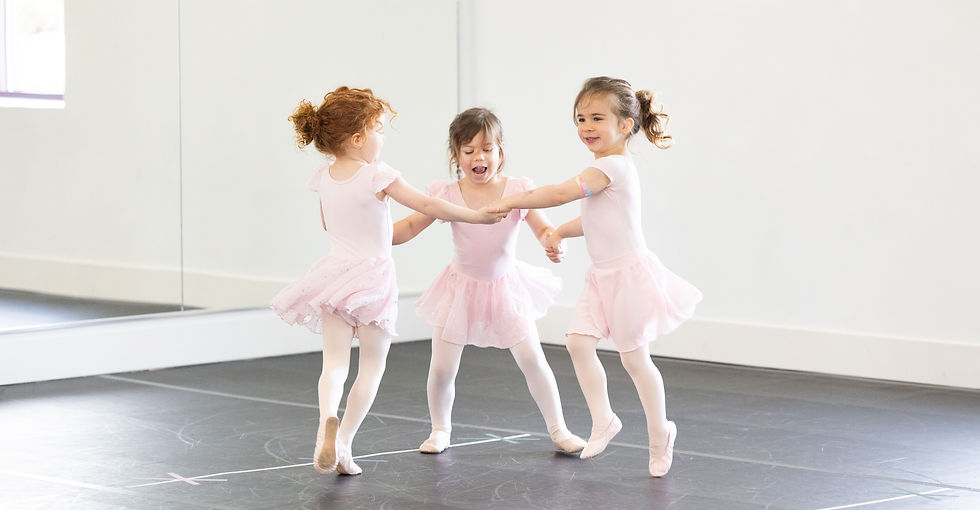
Children are constantly balancing finding joy with growing into happy, caring people. Dance supports children’s well-being by fostering emotional regulation, communication, confidence, and connection.
Emotional Regulation in Early Development
None of us is born knowing how to regulate our emotions. We learn through experience, and the early years shape how we process our world.
Childhood is where we practice hard things inside soft, joyful moments. Dance
helps children learn to navigate big feelings while experiencing the happiness of self-expression.
Communication Beyond Words
Not every child has words for what they feel, and that’s okay. Movement offers another language. Through gesture and expression, children communicate emotions that otherwise stay bottled up. That release builds confidence and clarity from the inside out.
Supporting Healthy Identity Building
As children gain competence in movement, they begin to internalize powerful beliefs like ‘I am capable’, ‘I am creative’, and ‘I belong here’. Those beliefs shape self-awareness and confidence, which are two pillars of our identity. Strengthening these is so good for our mental health.
Community and Social Skill Building
Dance environments teach the joy that cooperation and shared movement bring. Children learn within a kindhearted, like-minded group while still expressing their individuality. They practice collaboration without ever losing themselves.
Why Dance Matters for Adults
Adulthood brings responsibility. Jobs, caregiving, bills, obligations. Too often, caring for ourselves falls to the bottom of the list. However, if you make the time to take care of yourself, your capacity to care for others increases.
Dance classes unlock joyful movement, gently insisting you make space for yourself to find balance and reconnect with your joy.
Reconnecting to Play and Creativity
Why did we ever decide that play was only for children? Adults need creativity and expression just as much. Adult dance classes teach movement that improves cognitive flexibility and reduces mental rigidity. It reminds us that play is not frivolous; it’s nourishing.
Stress Relief and Mental Reset
We’ve all thought it: “I need something that quiets my mind.” Focused movement shifts attention away from rumination and toward presence. Breaths deepen, and thoughts soften. By the end of class, clarity often replaces anxiety.
Longevity and Cognitive Health
Dance is one of your brain’s favorite forms of exercise. That’s because it uses coordination, rhythm, memory, and emotional engagement to build complex neural pathways. These, in turn, strengthen cognitive resilience and may even protect against age-related decline.
How Movement Haven Supports Mental Well‑Being
Our dance classes focus on building stronger brains and encouraging joyful self-expression over nailing every micro-movement in a routine.
A Studio Culture That Prioritizes Safety and Belonging
Dance is for everyone. We welcome people of all ages to experience the joy of shared movement in a supportive space.
A Developmentally‑Grounded Teaching Philosophy
Dance is incredibly powerful for developing brains. We intentionally use it as a vehicle to build communication, patience, resilience, kindness, and joy.
Joyful Movement as a Lifelong Skill
Dance doesn’t have an expiration date. It walks with you through every stage of life. Learning to make space for that connection to music and movement now means it will be easier to tap into that joy for years to come.
Dance and Mental Health: Frequently Asked Questions
What are some dance activities that improve mental health?
Structured classes, rhythm-based choreography, improvisation, and group routines all support emotional regulation, cognitive engagement, and social connection.
How will dancing help you to improve yourself emotionally?
Dance strengthens emotional regulation, builds confidence, and improves stress response systems through consistent movement, expression, and skill development.
Is dancing better than walking?
Dancing and walking are both beneficial. Walking supports cardiovascular health, while dance adds memory sequencing, coordination challenges, expressive engagement, and social connection to the mix, further strengthening your brain and body.
What are the mental health benefits of dancing?
The mental health benefits of dancing include improved mood, reduced stress, stronger focus, increased confidence, deeper social connection, and long-term cognitive resilience.

Our mental health is built in small, repeated experiences of resilience, connection, achievement, and joy. Dance creates space for those moments to happen, whether you’re 6 or 62. If you or your child is ready to feel the difference intentional movement makes, book a class today.


Comments